Wednesday, November 27, 2019

Women, Science, and Antarctica

There's a wild convergence going on in my life right now of women, scientists, the ends of the earth, and the quest for worldwide change.

Right now, the 4th cohort of Homeward Bound is on their 3 week expedition to Antarctica - the southern end of the earth (poetically, not literally because the earth is an oblate spheroid and not a flat surface). I've been following their journey rather obsessively, watching them cross the Drake Passage and seeing where they are at each day. Check it out here: https://www.cruisemapper.com/?imo=8802882

It's cool the technology we have that allows us to follow a ship, in Antarctica, and see where they are in real time!!

And the next cool thing is that HB4's ship - the Hebridean Sky - is currently (as I'm writing this) next to HB5's ship the MV Ushuaia. And in one year I'll be there. In Antarctica. On the MV Ushuaia. IN ANTARCTICA.

That's right y'all - I'm going to Antarctica next year as part of Team HB5 - the 5th cohort of Homeward Bound.

Homeward Bound is a year long global initiative training women in STEMM in strategy, visibility, and leadership so that we can take our place at the table and be leaders of the future. Women are underrepresented in leadership roles and we're changing that. And after a year of online training, homework, meetings, collaboration, and everything else, we're going to Antarctica together for 3 weeks in November 2020!

Antarctica is the frame for this, for many reasons. It's at the forefront of climate change. It's an extremely fragile ecosystem. It's remote and also incredibly iconic.

But this journey isn't just about Antarctica. It's about women in STEMM. About climate change. About becoming a leader. About scientific literacy. About global collaboration for change. About increasing the visibility of women in STEMM who are changing the world.

About the worldwide network of those very same women working together to protect our one and only planet. And sure, it's a little bit about Antarctica. Because Antarctica is a place at the front lines of climate change - what happens there impacts us all.

But Antarctica is also a symbol - of how women in STEMM have changed the world, of global collaboration for the greater good, and it's a symbol of scientific exploration. Because it isn't just about Antarctica. It's about becoming a leader and protecting the planet.

HB4 is making a splash this year and there's been loads of media coverage. I assume next year we will be doing the same and I am ready to take my place!! Even Al Gore is talking about it:


And Forbes wrote a brilliant piece on this, that came out just the other day: The Largest Ever Women’s Expedition To Antarctica Will Upscale Science Diplomacy

Make Them Mainstream, which I just discovered, also covered Homeward Bound! Homeward Bound – Women’s Leadership in STEM

And so did Polar Latitudes - Mother Nature needs her daughters

And by the dream master herself, the woman who created Homeward Bound, Fabian Dattner - I am willing and able to lead

As you can see this is a brilliant endeavor and I'm so beyond excited to be part of it. I'll be writing about it more, because it IS conservation related in the broadest sense. The entire world is connected, science is awesome, climate change is happening and we all need to do our part. So that's why I'm going on this mental, emotional, knowledge filled, and literal journey.

Also you can check out my fundraising page for more info HERE.

Sunday, October 13, 2019

The Bear Story

As a field biologist, I have a LOT of field stories - they're often ridiculous, often informative, and often hilarious (after the fact). Here's one of my favorites and let me know if you want to hear more of these tales from the field!
---------------------------------------

"Watch out for bears," my friend M said as I got out the truck.

"Hah, yeah right," I replied as I shut the door and waved him off.

It was around 0500, which is scientist code for 5:00 in the morning. It was still dark out, which was kind of the point. M had dropped me off on the side of the gravel road and left, but that was the plan. Often as a field biologist, we are required to do seemingly crazy things like get up at 0430, drive into the woods, and get out of the truck and walk into the woods alone before sunrise. Or maybe it’s actually crazy and not just seemingly crazy.

I was at Red River Wildlife Management Area* in April 2006, working for the Louisiana Department of Wildlife and Fisheries as a student worker. I worked for them during my college years, doing a variety of tasks in a variety of places, in a variety of conditions. This particular time was during spring break, when the students were allowed to work 40 hours a week (as opposed to 20 hours a week when classes were in), so M and I were out here for the week to work. 

Red River Wildlife Management Area is one of my favorite places, despite it's free standing shrub like stands of poison ivy. It's nestled in the arms of the Mississippi River, near the Old River Control Structure. When the river is low, you can drive for a mile inside the levee before you ever find water. And when the river is up, you can stand on the levee and see nothing but water for as far as the eyes can see. 

Red River is 70,000 acres of mostly very typical bottomland hardwood forest, full of diverse set of species. Backwater flooding is common, and species are adaptable to flooded and not flooded conditions. It's home to songbirds, turkeys, deer, hogs, and yes even the occasional bear. The WMA also features moist soil units for waterfowl habitat (where I did some of my master's research), dove fields, and 

M and I were at Red River that week to do spring songbird point counts. Point count surveys are a systematic way of assessing species abundance and diversity. A set of points are predetermined at a standard distance apart, and the biologist will go to those points, wait for disturbance effect to end, and then start the count. During the count, bird species, direction, distance, and number are recorded. After repeating this process multiple times in an area it’s possible to get an idea of population sizes and species diversity. Example: If you only hear 3 birds the whole morning, populations are low. If you hear 15 species and 200 birds in a morning, you have a much stronger bird population. Repeating surveys across a whole area, like a wildlife management area, or in various different habitat types gives you an idea of which species use which habitat types and how many birds there are. It's a very common method in the bird world. 

To do point counts, you have to be out there when the birds are most active so you can detect them. Songbirds are most active singing and calling before dawn to mid-morning. So if you want to do point count surveys for singing birds during the breeding season, that’s when you are going to be doing field work.

The truck tail lights disappear around the bend, and I stand in the middle of the road assessing my situation. It's 0500, it's pitch dark out, but I have a headlamp. I also have a can of bug spray in my pants pocket, a bottle of water in the other pants pocket, a hat, a knife, and my clipboard with an assortment of pencils. That's it.  

I think to myself: I sure hope I don't see a bear. Not only am I not exactly prepared but I have never had a bear encounter before. Also, M would be pissed if I see a bear and he doesn't. So I decide I'm going to make as much noise as possible before sunrise to scare off any large lurking mammals. Or at least until I can see beyond my headlamp's circle of light. 

Louisiana Black Bears (Ursus americanus luteolus) are a subspecies of the regular black bear, and at the time of this story were listed as threatened under the Endangered Species Act.** At the time, the populations of black bears were semi isolated and kind of scattered. Bears were being reintroduced to areas like Red River, so the idea of seeing a bear in the woods was totally in the realm of possibility. M and I knew there were bears out there, but had never seen one ourselves during our time working there. We'd heard stories from the biologists though about bears seen in trees during timber cruises, about helping release relocated bears, and field stories from grad students studying black bears. M and I are bird people, we don't usually have to worry about coming face to face with a person sized bird that may or may not be in a predatory mood. 

However, black bears in Louisiana are a different beast than black bears in the rest of the country. For starters, they're not as habituated to humans and tend to be frightened by our presence. When wildlife of any species is habituated to humans and loses that self preservation fear is when wildlife and human conflicts occur. Some black bears have since gotten into dumpsters and the like closer to human habitation, but for the most part black bears are not a huge disruption in Louisiana. They live mostly in large stretches of undeveloped habitat in the Atchafalaya Basin, which is good for them and good for young student workers who have no idea what to do if they see a bear in the woods. 

This transect I was doing this particular morning required me to cross this ridiculously high blackberry thicket (damn Rubus!) between the road and the edge of the woods. I dove into the wall of thorns, eventually crossed the thicket, and was in the woods. Since it was so early in the morning, it was still very dark. Good thing I had my headlamp! With my map in hand, I headed to my first plot. 

At the time, we had printed out maps with points on it. Distances were measured in "chains" - which is 66 feet. A chain is an old unit of measurement from land surveying days in the 16th and 17th centuries. It's not widely used anymore except in agriculture and timber. Because I was working for the forestry department, all our measurements were in chains. 1 chain = 66ft, and 80 chains = 1 mile. It's super logical just like the rest of the imperial system. 

So to find my first point, I had to enter at a specific mark from the road, pace a certain number of chains in a certain trajectory, and I'd be at my point. So that's what I did. I entered the road where I was supposed to, paced the distance in the right direction, and arrived at my first point count.

When doing point counts, you have to wait a few minutes from the time you arrive for the disturbance caused by your arrival to settle down and birds to return to normal activity. In those few minutes you stand quietly and just listen and wait. It's a remarkable way to observe the world around you because you are literally forced to quietly stand still and do nothing except listen and look. It's amazing what you can hear in the woods early in the morning when you're quite and alone. 

After the disturbance period, I did my point count, and started pacing to my second point. The points were in a grid and I started at one of the bottom corners. I'd go up the side, and snake my way across the grid until I reached the other end and then exited back onto the road. If I needed to go around any obstacles that limited my straight line pacing, I would pace around the obstacle, pace forward, pace back to the original line, then continue. Basically you made a big open sided square around the obstacle so you kept track of the number of chains you paced between points. 

En route to my second point, I encountered another ridiculously large blackberry patch (damn Rubus!) so I paced left to go around it. This let me walk through a slough which was way better walking than blackberries. So I walked down this slough, crashing over things, not exactly trying to be quiet at all. I was mostly thinking that I didn't want to walk up on any hogs and that maybe all my noise would scare them off before I got there. On this new course I had to climb over this rather large downed tree, which is much easier to traverse than a blackberry patch, and when I landed on the other side I saw something in the blackberries ahead of me.

It was just around sunrise now and everything in the woods was a bit grey. It wasn't light, exactly, and I still had my headlamp on, but I could see a bit outside of my circle of light like I couldn't 45 minutes earlier. All I could see ahead of me was that the blackberry shrubs were moving.

So I stopped.

I saw the blackberry bushes moving ahead of me, but didn't really hear anything. I was standing with my back against the tree I had just climbed over, of which the top was was about waist high. I watched the bushes for a few seconds, then I saw a small black creature on the edge of it. At first I thought it was a young hog but it was hard to tell in the morning sunrise greyness. 

Only this creature was furry. That's weird. Then I saw a second small black creature. Also furry. That's when I realized that it was definitely not hogs and that it was two black bear cubs. CUBS.

But where was mama bear?

At this point I was assessing my situation. I had a metal clipboard and bug spray with which to defend myself if I had somehow gotten between mother bear and cub bears. I was not that far from the road, but I was very far from M. I had my cell phone with me just in case, but it was rather pointless because there was no cell service out there. Climbing a tree is out of the question since I couldn't reach any branches, and also bears are better climbers. I wasn't at my second point yet, and what I needed to do to reach my second point was pace back to my right a little ways to get back on track from avoiding the first blackberry patch, then pace forward another 2 chains. So I wasn't that far from my next point at all. I had my back against a tree, two cubs in front of me, a point count spot not far away from this location,  no idea where mama bear was, and not much else in the way of ideas of what to do. 

It felt like minutes but it was in reality only a few seconds for my brain to process all that. 

The cubs were only 30 feet away, and all I could think about was where the mother bear was, and what I would do if she came after me to defend herself and her cubs from this early morning intruder. The few seconds between seeing the cubs and trying to find the mother bear were the longest of my life. 

But mama bear showed up real soon and luckily she was right behind the cubs munching on some blackberries. She stood up to her full height and looked at me over the top of the blackberry patch. She didn't see super disturbed by my presence, and didn't do anything threatening. My best guess is she thought I was a hog, because I was making a lot of hog noises while crashing through the woods trying not to walk up on wildlife, or didn't sense me as a threat. Either way, I had no intention of staying and finding out how tolerant she might be. 

This bear family wasn't right where my next point was supposed to be, but they were too close to my next point for my comfort and she definitely didn't seem keen on leaving. Besides, I didn't really want to provoke her or hang out for too long near her cubs. If I went to the next point I would still be pretty close to them and that didn't seem like a brilliant plan in the barely lit woods. 

I was still standing up against the downed tree, so I climbed over it backwards, trying to keep an eye on the bear family. I didn't want to turn my back on them right away so I just kept backing away until they were out of sight. Then I turned around and high tailed it out of the woods as fast as I could. It didn't seem like the bear was coming after me in any way but I didn't want to hang out and possibly provoke her. 

As I was high tailing it out of the woods I walked right up on a sleeping deer. I scared it and it jumped up and ran away and it doing that scared the hell out of me! Between the bear encounter and jumping a deer I was a nervous mess by the time I reached the road. 

M wasn't supposed to pick me back up for a few hours, and I knew where he was at a few miles down the road, so I started walking down the road, figuring I'd just meet him there instead of sitting on the side of the road doing nothing. I also figured there was probably not much chance of further wildlife encounters in the middle of the road. 

So I just started walking towards the truck, which was a few miles away. I heard a truck coming up behind me on the road, but nobody else we worked with should have been around there, so I jumped into the blackberry bushes (damn Rubus!) on the side of the road so nobody would see me. You never know who is going to be on these WMA roads and I definitely didn't want to deal with random yahoos that early in the morning, especially as a lone female walking down the road, even if I was wearing LDWF attire. It wasn't a work truck anyway so I stayed hidden and then continued on my way after they passed. It took me awhile to walk to the vehicle but I made it there while M was still in the woods.

When M got out of the woods and saw me sitting on the truck, he was confused. After I told him what had happened, he was pissed as predicted that I saw bears that morning and he didn't. I still haven't heard the end of it! And since I didn't finish my transect, he went the next day and did it, hoping to see bear family. He didn't. I haven't heard the end of that yet, either. I don't know if M has since seen a Louisiana black bear, but I'm not in a hurry to ask him just yet.

Later that day our supervisor, the forester for the WMA, asked me "Was she collared?" Honestly, I don't know. I still don't, to this day. I assume she was, but I didn't have the presence of mine to look for a radio collar when I was scared by the whole encounter. I'm not even sure I could see her neck because she was behind the blackberries. It's possible she was, because black bears are well studied by biologists from a variety of agencies working together to manage the population

Essentially running away from a family of black bears and not finishing my field work for that morning may seem like a rookie maneuver, and it probably is. In hindsight, I could have calmly paced back to the first point, paced over to a further away transect line, and continued my point counts from there and just skipped a few of them to give the bears space instead of skipping the whole set. But at the time, I was 21 years old, a student worker who hadn't spent a ton of time in the woods alone in the dark, and not particularly keen on having a second run in with a family of bears even if they didn't seem to be bothered by my presence. Ultimately M went back the next day and redid the whole set, hoping to see bears, but he didn't and I didn't see any on the rest of my point count sites for the rest of the week.

I feel really lucky to have seen a Louisiana black bear in such a peaceful and natural setting, even if I was 85% terrified. I was not even a little bit prepared to see a bear, though maybe you never really are. I've since seen one other Louisiana black bear - a big male further north in the Louisiana Mississippi Alluvial Valley. I was lucky enough to see him running across a field first thing in the morning, and I was also lucky enough to be on a 4 wheeler and not on foot in the woods. I was able to enjoy that experience much more knowing the bear was moving away from me and knowing I had a safety net vehicle. They are really beautiful creatures. 

I've got another bear story to tell, about a young grizzly, but I'll share that for another post! 

--------
*Red River WMA is now Richard K Yancey WMA. It was renamed in 2017 in honor of Richard K Yancey and his work for wildlife as a former LDWF biologist, Assistant Secretary in the Office of Wildlife, and one of the forces behind the creation of the Tensas National Wildlife Refuge.

**The Louisiana black bear is now considered "recovered" under the Endangered Species Act and numbers between 500-700 individuals in the wild, according to USFWS.  

Tuesday, September 24, 2019

The Bottle Showdown

There's been a lot of debate lately about plastic bottles, and plastic waste in general. AS THERE SHOULD BE. Because we are in a climate pickle and everything is connected. So let me lay it out for you as there are a lot of factors involved. 

Creating plastic bottles requires petroleum materials to make chemical compounds to create plastic, and then this is turned into plastic bottles. The everyday plastic bottle IS mostly recyclable (a lot of places) but it isn't actually recycled as much as it could be. And it can't be recycled over and over again forever. So there's that. 
Pros - cheaper, durable
Cons - only mostly recyclable, reliant on oil 

Creating aluminum cans/bottles requires mining bauxite, which is horribly destructive. But the everyday aluminum can IS totally and completely recyclable worldwide. And is recyclable time and time again endlessly. But it is a little more expensive than plastic for the company selling a product (water/soda/beer/whatever) in a container, but endlessly recyclable. 
Pros - durable, endlessly recyclable f-o-r-e-v-e-r and valuable enough that people WILL recycle
Cons - bauxite mining 

I'm going to ignore glass bottles because I don't feel like everyone using glass will solve our problems when it's bulkier and heavier and not everywhere recycles glass anymore, though it is also endlessly recyclable. 

So things that come in plastic bottles are mainly beverages - water, carbonated water, sodas, juices, on and on. Things that come in aluminum cans are also mostly beverages - water, carbonated water, sodas. Things that come in aluminum bottles are mostly beer. 

I feel like the beer industry is onto something here. 

I used to think the aluminum bottles were dumb, when I could just buy a can of beer. But the ability to reseal the container is helpful. But this doesn't just apply to beer. 

So my main question is - 

Why are we using plastic bottles AT ALL when we could use aluminum cans and aluminum bottles in lieu, which are endlessly recyclable??

I suspect the answer is profit margins because aluminum is slightly more expensive, and probably also stubbornness, and maybe with a dash of consumer appeal. 

But if companies like Coca-Cola and Pepsi stopped selling single serving plastic bottles and started using aluminum bottles instead, I would TOTALLY jump on that train. And I don't even drink that much soda. Before you jump all over me and say "but Rachel they do make aluminum bottles" let me tell yes I know. Coca-Cola does make aluminum bottles of the 8.5oz variety. But it's more of a novelty item marketing as "vintage" than a mainstream product aimed at solving a pollution crisis. 

I feel like much ado is made of bottled water, fairly enough, but the conversation often ignores bottled sodas. There's literally millions of bottles of soda sold everyday, And billions of plastic water bottles are sold every year. So much ado SHOULD be made of bottled water. Most people drinking bottled water have access to clean and safe tap water and that's unforgivable. 

But we ignore how many people also drink soft drinks on the regular that choose plastic bottles because they're resealable (especially if it takes them 3 days to drink a 20oz soda like me) over aluminum cans. What we need is CHANGE. 

CHANGE in consumer habits to drink less sugary sodas (for our own health). 
CHANGE in production to use less/no plastic for packaging needlessly (for the earth's health). 
CHANGE in attitudes towards everyone starting to do the right thing because it's the right thing to do. 

Virgin aluminum is costlier than plastic, and bauxite mining is horribly destructive as discussed earlier. But using recycled aluminum costs only 5% of new aluminum, and that loop can go on forever. And a lot of places already have high aluminum recycling costs. It's valuable enough that people can and will and do recycle it. So we can use the same aluminum over and over again and again forever. If we do that, maybe we won't need to mine as much or any bauxite anymore if all aluminum is recycled. And not using plastic means no reliance on petroleum, and no drilling or fracking or anything of that nature. Seems like an all around win to me. 

Resources
Aluminum bottle Wikipedia

Sunday, September 1, 2019

Review: Cleancult

I was running out of dish soap and counter cleaner, and loathe to buy things that come in plastic bottles. In my online searching I found Cleancult! Their products come in recyclable cardboard, and sounded pretty awesome so I placed an order to give it a try. I've now tried all the products so here's my reviews of them:

Counter cleaner - it smells great, seems to mostly clean the counters. Doesn't do well with anything greasy, though. Probably not actually disinfecting but for general counter cleanliness it seems fine. And it smells good too.

Lemongrass soap bar - I like the scent, it foams up nice and everything, but probably I'll just stick with my normal bar of soap after this. No fault of theirs, I just like my regular bar soap better.

Dish soap - I actually haven't used this one yet, but I have it to use. I didn't run out of soap as fast as I thought I would.

Dishwasher tablets - These come in a paper bag, and seem to wash the dishes totally fine. I was previously using a powder in my dishwasher and maybe I'll continue to use that after just because it's easier and cheaper and also totally recyclable.

So to sum up - I love the idea of the products coming in fully recyclable containers and the cartons are really aesthetic. It's 50/50 for me using their products in the future. Possibly will continue to use the liquid soaps and probably won't use the soap bar and dishwasher tablets.

It's hard to find cleaning products that don't involve a ton of plastic in my strive to be zero(er) waste. This is a step in the right direction but there's such a long way to go still!

Thursday, August 29, 2019

Katrina 14th Anniversary and the Future

On this day 14 years ago, on the 29th of August 2005, Hurricane Katrina struck the US Gulf Coast. This should be a time of reflection on the deaths, tragedy, and damage caused by the storm. But this should also be a time to remember what happened, and to learn from it.

Katrina was Category 5 storm, made landfall as a Category 3, and had a massive footprint - satellite imagery before landfall shows the storm taking up over half of the Gulf of Mexico. Almost 1,900 people were killed during this storm, and it was the deadliest hurricane in the era of named storms (only the 1928 Okeechobee storm was deadlier). New Orleans flooded, Gulfport MS was flattened (as well as pretty much all of the Mississippi Gulf Coast),  and all told $125 BILLION in damages were caused by Katrina.

Again - 1,826 people killed and $125 billion in damages. 

I could write all day about who did what wrong, and go into extreme detail about living in the immediately-after-Katrina shit show that was Louisiana, but I'm not. I rode through the storm like many other people I know, and while my story is nothing compared to most people's, I don't want to dwell on that aspect of it. Yes it was horrifying. Yes the aftermath was tragic and horrible and avoidable. Yes so so many things could have been done differently (basically everything). Many people died and that loss of life is horrible and should be remembered with respect and honor. I want to make sure everyone knows that what I want to talk about in no way diminishes the respect and sadness I have for those who died 14 years ago. I simply want to focus on the future in this editorial, and what we can do to prevent this from happening again.

So, what I really want to talk about is what we, in Louisiana, can do NOW to prevent disasters like this from happening in the future. Other coastal states on the 3 US coasts have their own set of challenges, so I'm going to focus on Louisiana specifically. So today, 14 years later, I want everyone to remember what happened and those who died, and contemplate what a future would look like where this never happens again.

Katrina made landfall in the Buras LA area. That area is essentially a narrow strip of land with the Mississippi River running down the middle. It's the leg of the "birds-foot" part of the delta. There's not much in the way of a the storm there - houses, people, the river, levees, and almost no wetlands. 

Wetlands. That's a key component to my op-ed here.

Louisiana is a wetlands rich state. In the early 2000s, before Katrina, researchers had the foresight to begin a progressive and forward looking plan to restore the coast and monitor the coast. The Louisiana Coastal Master Plan is a suite of restoration projects across the coast aimed at offsetting land loss by building new wetlands and by restoring what's still there. In conjunction with that, the Coastwide Reference Monitoring System (CRMS) was born to monitor how well these projects worked, conditions before restoration/construction, and conditions afterwards for 20 years. The first few CRMS sites were launched mere months before Hurricane Katrina.

So, before this disastrous storm that ruined so much, scientists in Louisiana were already looking at the big picture and trying to tackle the disappearing coast problem.

Which is good.

And here we are, 14 years post-Katrina, and many projects in the Coastal Master Plan have been constructed and implemented, and monitoring is continuous and longterm data is being collected. We still have a long way to go with some large cornerstone projects to be built. But bigger picture is that more wetlands = more benefits, for everyone.

Wetlands absorb/reduce storm surge, at a rate something close to 1 foot of surge reduced over every 2-3 miles of marsh. [So, a hypothetical example: If you've got a 10 foot hurricane storm surge, and 30 miles of marsh between the open water and a city, those 30 miles of marsh would reduce all or most of the storm surge so there's limited to no effect of storm surge on the city.]

Wetlands filter out nutrients from the water, trapping them from funneling out into open bodies of water where they could create hypoxic zones, and instead turn them into healthy marsh plants. Plants which in turn help reduce storm surge.

Wetlands capture sediment from the water, and build the marsh height higher over time or build up enough to offset subsidence (natural soil compaction), so that the marsh stays at an adequate height for plants to grow, capture nutrients, grow strong, and again reduce storm surge when the time comes.

And that's just the wetlands themselves! You can read my piece about the whole suite of ecosystem services wetlands provide: Taming the Mississippi, Part 3: Wetland Values

There's many complex interactions in storm surge, wetlands, wave dynamics, hydrology, and all these interconnected things but the main point is - wetlands are valuable and provide protection/assistance against a variety of issues (storm surge, nitrification, sedimentation).

Basically, wetlands are awesome.

So to bring this full circle, more wetlands = less problems. So if there had been a healthier and larger marsh ecosystem between Katrina storm surge and people/cities, then storm surge would have been reduced. Houses could have been spared, levees maybe not topped/breached, and on a larger scale - maybe the storm surge that broke the levees in New Orleans wouldn't have been as stressed by a smaller storm surge that had been reduced by these wetlands that don't exist anymore.

It's a hypothetical, but maybe.

If we create, build, and restore our wetlands we help protect ourselves and the people/places we love from future storm related tragedy.

It's not going to solve all our problems, but it will help with some. 

We need to be PROACTIVE, instead of REACTIVE. It's hard to think about spending so much money to solve a massive problem that might only actually come to fruition once every 100 years, but it's cheaper than $125+ billion dollars in damages potentially every few years.

Living shorelines has become a bit of a buzzword the last few years, but what it really means is what I'm suggesting - natural habitat used as a buffer between nature and people. NOAA has a great website about living shorelines HERE. I'm just suggesting we use a much bigger scale of living shoreline in Louisiana and every other wetland heavy coastal state.

Louisiana specifically got into this bind in the first place for a few reasons, but the 2 big ones are:

- people isolated the river from the wetlands it built, so the wetlands are disconnected and no longer get the totally natural yearly floods and flushes of water, sediment, and nutrients that historically sustained them.

- oil & gas exploration in the early 20th century dug canals and pipelines criss-crossing across the marshes, which allowed saltwater to intrude further than it had before, fragmented the marsh and made more miles of shoreline available for erosion, and destroyed the wetlands in the path of the canal or pipeline.

And now, we have fragmented marshes that don't regularly and naturally get the nutrients and sediments they need to sustain their existence. We're in a bind. The Coastal Master Plan is a massive plan to use engineering to:

- replicate the natural processes in some ways (sediment diversions),
- to repair the damage in some marshes (marsh rejuvenation projects),
- build new marsh in replacement (dredge and fill marsh construction projects),
- restore and reconnect how water flows and moves in an area (hydrologic restoration projects), and
- provide shoreline protection to abate erosion (like rock wave barriers).

It's not perfect. Nothing is ever perfect in the world of science and wetlands restoration. We have to balance the big picture vs the smaller scale needs of the individual. Without wetlands, we're all doomed, so doing anything is better than doing nothing. And building more wetlands only has positive impacts - it helps us save money on damages in future hurricanes by protecting us better. It helps us protect people and structures. It helps us by capturing carbon and acting as a sink in the face of climate change, which is a different conversation but still important.

On a smaller more individual or city-wide scale, we can do things to help prepare us for future hurricanes. We can storm proof better. We can build houses and buildings stronger and to higher standards (which is more expensive in the front end, but less expensive in the long run). And a really contentious one - we can move inland from the most perilous locations to some to more protected places (we can have many long debates about the pros/cons of this one, about the ties and merits of home, so we'll save that debate for later, but it is an option though not a good one).

The Coastal Master Plan isn't perfect - nothing of a scale that large is perfect. But the big picture idea to build wetlands because they are a valuable ecosystem and because we need their protection is the key idea. So the details of the plan may not be perfect and may not suite every single need in every single area, but we need wetland restoration and we have to do what we can. I personally think having a comprehensive strategy is amazingly progressive, and I'm glad that we have a plan and are doing everything we can to make it work.

So it's the best we can do without just letting the river run free.

But that's a whole other conversation.


REFERENCES:
CPRA: 2017 Coastal Master Plan
CWPPRA: Information about all the projects in the Coastal Master Plan
CRMS: Wetlands monitoring information and public data
Among the Ruins of Mexico Beach Stands One House, Built ‘for the Big One’ NY Times, Oct 2018

Monday, August 26, 2019

Repost: Climate Change is Real and This is No Time for Arrogance

I originally wrote this in April 2019, and I'm reposting it now because it seems particularly relevant with the Amazon on fire, the Arctic on fire, this past July being the warmest on record, and __.

Relevant recent news stories, as of August 2019: 
*The Amazon in Brazil is on fire - how bad is it?
*Amazon fires: G7 to release funds for fire-fighting planes
*Satellite photos show massive swaths of the Arctic engulfed in flames by 'unprecedented' wildfires
*Siberian Wildfires and Heatwaves in Alaska: How the Arctic Is Nearing a Point of No Return
*July 2019 was hottest month on record for the planet
*New threat from ocean acidification emerges in the Southern Ocean
*Wildfires Are Turning Important Northern Carbon Sinks Into Major Emitters


REPOST:

I keep hearing people debating about the validity of climate change research. It's 2019, and we're still debating something that has been proven over and over again by many scientists. People still don't "believe in climate change". But belief has no chair at the scientific inquiry table. Something either is proven, or it isn't. In this case, climate change IS proven, and has been proven many times over. So why are we still debating if and belief and what if it's not true and all the rest of those skeptical arguments.

There's 2 options for us humans:
1) Do nothing, keep our head in the sand, and pretend like everything is fine.
2) Do everything, make global changes for a better world, and do our best to solve the problem.

Which option do you think will have a better outcome?

Option #2, obviously.

Indulge me for a second, and let's consider something else. We're barreling along an unsustainable path of planetary abuse - pollution, resource consumption, trash everywhere, plastics everywhere, and the list goes on. Even if you ignore climate change and "don't believe in it", we still have a responsibility to do what is right for the planet.

If you disagree, why? My guess is arrogance. The concept that humans have the right to simply use whatever we want (water, air, trees, fish, sharks, any resource) with no respect and with complete disregard for the resource, ourselves, the future, or others is just plain arrogant. It's also disrespectful. Arrogance in the 20th century has gotten us to where we are today, and it has no place in the 21st century or our future.

Let's pretend for a second that in the year 2219 we find out that 97% of the world's scientists were somehow all wrong and that climate change wasn't true after all (but it is, we're just playing pretend in this scenario), but that in 2019 we chose Option #2 because it was the right thing to do. The situation seemed so dire that we took as much progressive, innovative, and clean action as we could for the next 200 years to save the planet the best we could. So that by the time the year 2219 rolls around, we're sitting pretty in a clean world, with loads of biodiversity, with healthy population, with less pollution, healthy coral reefs, and clean air and water. Maybe we lost some species, or land, or reefs, and are a bit warmer than we'd hoped, but ultimately avoiding a catastrophic outcome is a level of success.

Even if we were wrong about climate change, and it wasn't true, the world in 2219 is a much better place than a world where we continued down our current path. So why are we still debating "if" and not doing everything about "how"?

We have so much amazing technology these days that we have the tools to fight climate change. We just need to ACTUALLY DO IT. Let's go, people. Time is running out.

Choosing to do the right thing is not usually the easy decision. It's hard. But it's the right thing to do.

Saturday, August 10, 2019

An era of land conservation in Louisiana

I am currently reading the August Book of the Month - The Gulf: The Making of an American Sea, by Jack E Davis, and delved into the history of many of the largest refuges in Louisiana. Edward Avery McIlhenny was the force behind three big wildlife refuges, by buying or orchestrating their creation. 

I shared some of this on Twitter but here goes in more detail:

1. State Wildlife Refuge
Edward McIlhenny, of Tabasco family fame, was an avid conservationist who fought to save egrets from poaching and outright slaughter in the late 1800s. He set aside property at Avery Island, his family's place, to help raise egrets in safety from hunters. He succeeded there and expanded his efforts to conserving more land in Louisiana. In 1911, He and Charles Willis Ward bought 13,000 acres and donated it to the state for use as a wildlife refuge. That today is State Wildlife Refuge.   

2. Marsh Island Wildlife Refuge
Olivia Sage, widow of millionaire Russell Sage, used her inheritance for philanthropy. Ward & McIlhenny convinced her to buy Marsh Island, around 76,000 acres in Vermilion Bay, and donate it to the state of Louisiana for bird conservation. She did it right away and today we have Marsh Island Wildlife Refuge.

3.  Rockefeller Wildlife Refuge
McIlhenny yet again bought a large tract of land and was instrumental in its protection for wildlife. He bought 86,000 acres of wetland on the coast with borrowed money, and then found a benefactor in the millionaire John D Rockefeller to buy the land from him and donate it to Louisiana for use as a wildlife refuge. The Rockefeller Wildlife Refuge is still going strong today.

Monday, August 5, 2019

Conservation Book of the Month, August 2019 -- The Gulf: The Making of an American Sea by Jack E Davis


You can join the book club on Goodreads HERE.

Shopping Ban: Month 10 update!

We're at double digits, y'all, in this shopping ban adventure. I will probably only continue to write updates until I reach a year and then just keep rolling as is because honestly it's not as interesting to write about anymore since I don't really struggle with it as much as I did in the beginning. So I've adjusted and feel totally comfortable with it, which is good! 

July went pretty well, though I exceeded my book budget. But since I spent $0 on books in June I guess that's a wash since I spent less than both month's budgets combined.

I destroyed some field clothes so spent $70 on new pants and shirts. I do not buy the shirts used, typically, because I want the maximum UPF I can get for my long days in the sun and eventually the fabric wears out. But I do try to buy the pants used, but couldn't find any long field pants since it's the middle of summer. I also repaired a few pairs of pants that were getting risque, so that's a win at least. I always start the field season thinking I'm all set on clothing and then I immediately rip half my pants and destroy half my shirts and have to scramble. Every time! Anyone else have this problem?

And I did buy a new Buff as well (proof). I buy a new one every few years for the same reason as field shirts - UPF. I've been spending an insane amount of time in the field the last few months (also mostly why my writing has been so sparse), and it was time for one of Buff's new UV+ buffs. So far I love it and it seems great - no sunburn, no windburn. Though of course still gotta use the SPF50!

That's pretty much it. I bought a wedding gift, gifts/supplies for the fundraiser that I talked about last time, and nothing else that I didn't list out already.

Saturday, July 20, 2019

Identity

Something I've been thinking about lately is personal identity, or identities. I'm a wetlands ecologist, therefore a scientist. I identify as a woman. I like to run, but does that make me a runner? It's all very complex.

I've seen a lot of arguing on Twitter lately about scientists vs who gets to claim being a scientist. Academia vs private/industry/government, like that somehow makes someone more or less of a scientist. In my opinion, neither is better, necessarily, though one category is better suited for the individual scientist. I don't like to hustle for money or want to get my PhD, so academia is not suited for me. I do like to work on projects and can run projects (just don't want to hustle for the grant money) so non-academia is better for me. To each their own, but why do we keep fighting about it?

Also, why do we keep fighting about who is vs who isn't a scientist? Do you do science? Then you are a scientist. The word scientist itself was formed to be more inclusive, so let's just be inclusive. If you do science and want to identify as a scientist (or not identify as a scientist and identify as something else) then go for it.

The same goes for other categories/identities as well, thought I don't often feel as comfortable claiming those identities as my own. I am a scientist, have been for years, and totally do identify as that.

I also do triathlons, but does that make me a triathlete? It does, but I don't feel comfortable describing myself that way for some reason. Same with running. I've run many events (including a marathon & an ultra marathon) but I don't describe myself as a runner. I love photography and really enjoy it, but don't really claim the photographer identity. I totally have a right to these identities, just like you have the right to whatever identities you want.

I think my real point is - if you do X activity, that gives you X identity, and then it's up to you if you want to claim it or identify yourself as such. There's also many other identities encompassing social, gender, and other areas. But mainly let's just stop putting others into boxes and just let everyone identify themselves how they wish to! Scientists included!

Wednesday, July 10, 2019

Shopping Ban: Month 9 update!

It's hard to believe that I've been on this shopping ban journey for 9 months now. It really doesn't feel like it and I almost don't even realize I've placed these restrictions on myself anymore. I am still aware of them and do my best to stay within them, but I don't feel actually restricted. Here's some examples.

1. I was down to my last pair of non-gym style shorts and in need. It's hot as hell here (almost literally) and I just can't make it all summer in jeans. So I went to a local secondhand shop and managed to find 3 pairs of shorts for $22! Normally one pair brand new would have cost me around that so it was definitely a win. Also they look brand new and nobody is going to know I didn't buy them new unless they come read this and ask me about it. 

2. I am allowed to buy things to replace items that are legit worn out, and I've now busted 2 pairs of field pants and 2 field shirts in the last few weeks so I bought 1 new pair of pants, repaired both of the pair I wrecked, and bought 2 new field shirts. I am not confident one of the repairs will last very long so another pair was definitely needed. And my long sleeve sun shirts lose UPF rating over time and I wear them constantly so I rotate out the older ones and buy 1-2 new ones every year anyway. Field gear is a weird category because I'm fine with buying used pants (but couldn't find any in my size) but want brand new shirts for max UPF protection. South Louisiana is brutal and I work outside all summer. Sun safe, y'all!

I'm also doing some fundraising for an exciting new adventure (which I will announce publicly soon!) and I'm offering some perks in exchange for donations. I've given myself a shopping ban hiatus on a few things so that I can achieve this goal. I needed photo mats, shipping envelopes, thank you note cards, and photo prints for this and went ahead and bought them. I don't think this counts as shopping, necessarily, because it IS for a project and it IS well thought out and it IS basically going to be gifts to people for donating to the fundraiser. So all that is fine in my opinion.

I also bought 0 books in June, but did immediately reach my $25 limit for books in July. I bought a digital copy of Bird Therapy by Joe Harkness and so far I LOVE IT. I also bought some books for the OC Book Club, used of course, from Thrift Books (which is possibly my favorite website ever after www.howmanyaltuves.com).  I have been heavily using the library for some research reading (yay public libraries!)

I have yet to purchase anything under the new Rule #3 of the shopping ban, which is to allow purchases from local artists. I have one in mind but have yet to pull the trigger on it. I tend to overthink purchases ANYWAY and this one is no different, even though it's allowed in the rules.

Keep being conscientious consumers and do your best to minimize your impact!

Sunday, June 30, 2019

The Cost of Science

I've spent much of the past month driving, in the name of science. Driving down the highway to the next field site, driving the boat to the next site, driving back to the launch, driving to the next boat launch. And endless number of hours and miles driven by land and water. All in the name of science.

The work we've been doing isn't destructive, exactly, but we are using a lot of fuel to collect the necessary data for our research projects. I often wonder, now and in past projects, if the cost of fuel and the price of emissions is worth the data and the end goal.

Trucks aren't exactly fuel efficient, particularly when towing a trailer, and boats aren't fuel efficient either, particularly not airboats. I've used ATVs in the past as well, and they use less fuel because they're smaller but still use fuel.

In graduate school I studied shorebird usage of rice fields during spring migration, and had to complete my survey rounds every 8 days. I'd drive hundreds of miles every week to visit 100 rice fields every 8 days to do my roadside surveys. I got loads of great data, had some good conclusions, and completed my thesis. But I drove thousands of miles in pursuit of that data.

If I drove 5000 miles in pursuit of that data, the average vehicle emissions is 2.1 metric tons. That's apparently equivalent to 2274 pounds of coal being burned, and 5 barrels oil being consumed.

I used the Car Carbon Footprint Calculator to estimate my carbon emission for field work, and the EPA's Greenhouse Gas Equivalency Calculator to make comparisons.

The thing that is tricky is that to collect data to make informed decisions and to make the world a better place typically requires some on the ground field work. In the case of my current research, we're studying the effectiveness of coastal restoration projects, and that information/data/modeling has implications worldwide, not just here. So in the big picture, the fuel we're using and the carbons we're emitting are smaller then the bigger problem we're trying to solve.

Except that the climate is changing, the seas are rising, the temperatures are warming, and all of that has additional complex impacts on coastal restoration and monitoring. Emitting greenhouse gases adds to the atmosphere and adds up to increase climate change.

So it's a double edged sword, really.  We need to collect the data to solve the problems and make informed decisions, but doing so also feeds the problem.

What's the answer?

I don't think there is a straightforward direct answer. My own guilt about using so much fuel in the name of science can be assuaged by me personally offsetting the carbon. It's not a total fix for it, but it can help, at least.

Finding a reputable organization to buy carbon offset credits is tricky though. There's a lot of moving parts and it's confusing. There's lots of organizations and websites that seem reputable but I'm really not sure how to tell, and they may all be reputable. However, the UN does have a carbon offset program: https://offset.climateneutralnow.org/. And because it's the UN I feel like it has a bigger bat to swing here so that seems like a good solution to me and we know it's reputable.

Not every scientific research project though has a cost of carbon emissions. Some studies require taking of animals, or clipping of healthy plants, or modifying the landscape to study how things react. There's an impact to everything we do, science or no, and I think the key is to do it responsibly and with the utmost care. We need to be aware of the impacts of our research beyond what we are actually studying and to be ethical about our work. Those are the keys, in my opinion.

Each month I donate $25 to a worthy cause and for July I will be using that money to offset carbon emissions. I am continuing my journey to a lower waste lifestyle, and this is another step in the right direction.

RESOURCES:
A Short Guide to Carbon Offsets
UN's Climate Neutral Now Offset Program
Gold Standard

Tuesday, June 18, 2019

Littering

I was sitting in traffic the other day, like everyone else who has ever tried to cross the "new bridge"* at any time of day for the entirety of its existence. And in the next lane was a white Lexus, with a guy driving and 3 passengers. And he's SMOKING. With the windows UP. And everyone looks MISERABLE. And then he flicks the cigarette butt out the window. OUT THE WINDOW. All nonchalant like, as if it's no big deal.

And all I could think is, what hateful flavor of asshole do you have to be to think that throwing a cigarette butt out the car window is acceptable behavior? I just cannot comprehend how anyone thinks this way. What trajectory did this guy's life take that he (apparently) thinks littering is acceptable, okay, not dick behavior, and possibly even that his cigarette butt is not his problem?

He must be arrogant, right? To nonchalantly flick trash out a car window, in full view of people, with no apparent qualms about the behavior is a level of arrogance I cannot comprehend. It's arrogant to think that you can do whatever you want, rules be damned. It's arrogant to think that this litter is somebody else's problem.

He must also be ignorant, right? At least ignorant in this realm of things - maybe he's a very nice man or really bright about other things. But in this, he's ignorant. It's ignorant to think that the trash you threw out the window is no big deal, that it doesn't matter, and that since it's gone it's not a problem anymore.

He must also be rude and/or inconsiderate, right? For starters he was smoking in a car with passengers with the windows up. Maybe they were all fine with hotboxing it but they looked unhappy. But also it's rude to throw trash out. And it's inconsiderate of others. This time it's a cigarette, but how many cigarette butts has this guy thrown out his car window? It's inconsiderate of the surrounding area too, because littering is bad but also it's unsightly.

Cigarette butts are bad because they're bite size for wildlife, and can be harmful to them. They're also some of the most common forms of litter, and possibly as much as 35% of all litter is cigarette butts. Also it appears that 75% of smokers have admitted to throwing cigarette butts out the car window [source]. Cigarettes contain toxic chemicals (which should be no surprise to anyone) but includes arsenic, lead, and plastic (these could surprise some). They're not biodegradable in any way either so it's not like they'll just disappear quickly.

 In my angry research I discovered that I can report littering! Even cigarette butts out car windows! If you're in Louisiana, the phone # is 1-888-LIT-R-BUG aka 1-888-548-7284. You better believe I'm reporting this shithead behavior next time I see it! Turns out the Keep Louisiana Beautiful group is doing that good work.

That number is only good for Louisiana but turns out there's a list by state of ways to report litter! I don't know how up to date it is but here goes anyway: https://www.greenecoservices.com/state-litter-hotlines/


-----
*The "new bridge" is the I-10 Mississippi River Bridge in Baton Rouge that crosses the Mississippi River. It's only new in comparison to the US 190 bridge just north of the I-10 bridge. Locally they're known as the "new bridge" and the "old bridge". 

Sunday, June 2, 2019

Shopping Ban: Month 8 update!

It's been ages since I wrote an update about my shopping ban but that's mostly because I've been cruising following my guidelines. I started on 1 October 2018, and I modified the rules of the game starting on 1 April 2019. Since my last update in March, I've traveled a ton for work, took 1 overseas trip to Scotland, visited friends in Denver, and traveled some more for work.

Things I've purchased since my March update:
1. 2 magnets + 1 book while in Scotland
2. New running shoes
3. A dress for a wedding last minute

#1 falls into the travel souvenirs category of which I am allowed to purchase select items while abroad.

#2 falls into the fitness related purchases when necessary category, and new running shoes were definitely necessary.

#3 was a last minute purchase that was demanded by the bride and while I'm aggravated about the purchase I do enjoy the dress so I will get much use out of it in the future (hopefully) at least. Originally I was supposed to wear a dress I already had, which would have been the best option, but I had to abide the bride's demands. So there's that one.

Overall it's been pretty slow on the shopping ban front. I have purchased nothing I didn't need or didn't meet the parameters of the challenge (except the 1 dress). So it's been a bit quiet!

I haven't honestly been tempted except for yesterday when I contemplated buying a tank top to support Skype a Scientist. And I may still do that, but I'm going to continue to contemplate it first. This potential purchase falls into the "Purchases for a cause" category in that the proceeds benefit Skype a Scientist. I've also been contemplating a purchase from Nurdle in the Rough but haven't taken the plunge on that one yet either, which also falls in this category.

I am in need of some shorts because it's a zillion degrees here during the summer so I will be scouring the secondhand shops in the next week or two for shorts that fit!

The good news is that I'm no longer tempted by the average purchases, I have no desire to shop, and I'm way more consciously considering each and every purchase. So I consider this experiment a success and will continue down this path!

Conservation Book of the Month, June 2019: The Beak of the Finch by Jonathan Weiner

View this post on Instagram

It's a beautiful sunny morning (here at least) and the start of June somehow so time for the next #ocbookofthemonth! The Beak of the Finch by Jonathan Weiner. Last month was about extinction and this month is about evolution. This book also won the Pulitzer Prize, just like last month's read. Come join the conversation on Goodreads (link in bio)! 📚 . From the back cover: "On a desert island in the heart of the Gálapagos archipelago, where Darwin received his first inkling of the theory of evolution, two scientists, Peter and Rosemary Grant, have spent twenty years proving that Darwin did not know the strength of his own theory. For among the finches of Daphne Major, natural selection is neither rare nor slow: it is taking place by the hour, and we can watch." . #ocbookofthemonth #bookclub #sciencebooks #evolution #galapagos #finches #conservation #nature #biology #birdsarecool #islandbiogeography #ecology

A post shared by @ outdoorconservation on

Monday, May 27, 2019

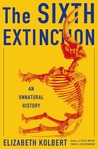
Review: The Sixth Extinction, Elizabeth Kolbert

The Sixth Extinction: An Unnatural HistoryThe Sixth Extinction: An Unnatural History by Elizabeth Kolbert
My rating: 4 of 5 stars

I learned a lot from this book, and saved many of the cited books to my own reading list for later. This book was sobering, eye opening, and motivating to me and I learned so much more than I anticipated. Also I love Elizabeth Kolbert's writing style - informative, humorous in a way, a touch informal here or there, very easy to read, and well organized. BRB I'm going to find everything else she's written and read that too! Anyway my review:

It's no secret that humans have dramatically altered the planet. Everywhere we've gone in our history has coincided with megafauna extinction, leading to landscape alterations, leading to this and that and the slinky just keeps falling down the stairs. We have the capacity and brainpower and dexterity to change the world, but the flip side is we have the capacity also to destroy the world. Possibly/probably without even realizing it. We've isolated species that have very strict habitat requirements, so they can no longer move about freely, and then slowly (or quickly) the population plummets and goes extinct. We've hunted large animals into extinction by the sheer ability to harvest a species that previously had no natural predators, reproduces infrequently, and reaches maturity slowly, so that now the species cannot gain enough members to offset take. Everything is connected, whether we realize it at first or not. We've introduced species across oceans, onto islands, and that has (probably unwittingly) caused the demise of the native species. But what it really all boils down to is the last few sentences of her book, which summarize it perfectly: "Right now, in the amazing moment that to us counts as the present, we are deciding, without quite meaning to, which evolutionary pathways will remain open and which will forever be closed. No other creature has ever managed this, and it will, unfortunately, be our most enduring legacy. The Sixth Extinction will continue to determine the course of life long after everything people have written and painted and built has been ground into dust and giant rats have - or have not - inherited the earth." We are accidentally, unconsciously, and sometimes knowingly eliminating species from the planet which thereby closes the evolutionary pathway she refers to. We are ultimately deciding who lives on in the future and who does not.

View all my reviews